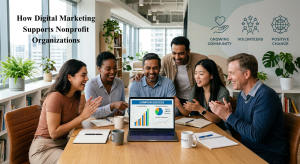
Understanding how digital marketing supports nonprofit organizations can help nonprofits reach more people, attract donors, recruit volunteers, and grow their mission with less wasted effort. Many nonprofits do powerful work, but struggle to get seen by the right audience online.
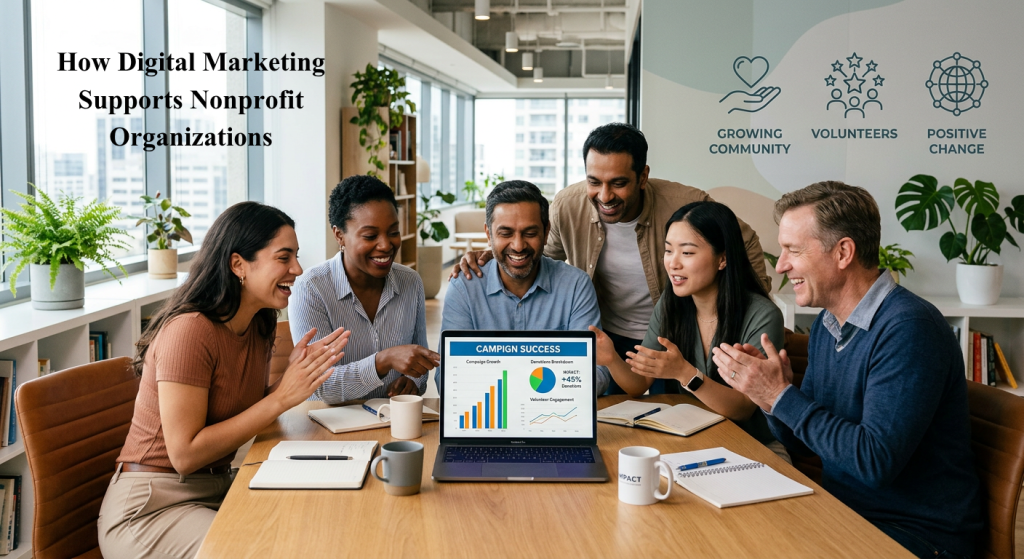
Digital marketing helps close that gap.
In this guide, you’ll learn:
- Why digital marketing matters for nonprofits
- Which channels can create the most impact
- How nonprofits can build trust online
- Practical examples of digital campaigns
- Simple steps to start without a huge budget
Whether you manage a nonprofit, support a local cause, or work in marketing, this guide will help you understand how digital tools can turn attention into action.
Why Digital Marketing Matters for Nonprofits
Nonprofits depend on awareness, trust, and community action. Digital marketing helps strengthen all three.
People now discover causes through search engines, social media, email, websites, videos, and online recommendations. If your nonprofit is not visible in those spaces, potential donors, volunteers, and supporters may never find you.
Digital marketing can help nonprofits:
- Share their mission clearly
- Reach donors beyond their local area
- Promote fundraising campaigns
- Recruit volunteers
- Educate the public
- Build stronger community relationships
- Track campaign performance
- Increase event attendance
- Turn one-time supporters into long-term advocates
For example, a small animal rescue may post adoption stories on social media, use email to request donations, and create blog content about pet care. Each channel supports the same mission while reaching people in different ways.
The goal is not to be everywhere. The goal is to show up where your supporters already spend time.
How Digital Marketing Supports Nonprofit Organizations
The best way to understand how digital marketing supports nonprofit organizations is to look at the full supporter journey.
Most people do not donate, volunteer, or sign up the first time they hear about a cause. They need to understand the mission, trust the organization, and see a clear way to help.
Digital marketing supports this journey by helping nonprofits:
- Create awareness through search, social media, and content
- Build trust through stories, testimonials, and transparency
- Encourage action through clear calls-to-action
- Follow up through email and retargeting
- Measure results through analytics and campaign tracking
A strong digital presence makes it easier for people to move from interest to involvement.
Example: From Awareness to Donation
Imagine a nonprofit that provides school supplies to children in underserved communities.
A potential donor may:
- See a social media post about the campaign
- Click through to the nonprofit’s website
- Read a story about a student helped by the program
- Sign up for email updates
- Receive a donation request before the school year starts
- Make a contribution through a simple donation page
That is digital marketing working as a connected system.
Digital Marketing Strategies for Non-Profit Organizations: Enhancing Engagement and Impact
Digital Marketing Strategies for Non-Profit Organizations: Enhancing Engagement and Impact should focus on people first. Tools are helpful, but the real goal is to connect with supporters in a clear, honest, and meaningful way.
Nonprofit digital marketing works best when every message answers three questions:
- What problem are we solving?
- Why does it matter now?
- How can someone help?
When your message is simple, people are more likely to act.
Key Digital Marketing Channels for Nonprofits
Not every nonprofit needs every digital channel. The right mix depends on your mission, audience, budget, and goals.
Here are the most useful channels to consider.
1. A Clear, Trust-Building Website
Your website is your nonprofit’s digital home. It should explain who you are, what you do, who you help, and how people can support your mission.
A strong nonprofit website should include:
- A clear mission statement
- Donation buttons that are easy to find
- Volunteer information
- Impact stories
- Program details
- Contact information
- Event pages
- Newsletter signup forms
- Trust signals such as reports, testimonials, or partner logos
Your website should also work well on mobile devices. Many people will visit from their phones after seeing a post, email, or event flyer.
2. SEO for Long-Term Visibility
Search engine optimization helps your nonprofit appear when people search for topics related to your mission.
For example, a nonprofit focused on food insecurity may want to rank for searches like:
- Food donation programs near me
- How to help local families in need
- Volunteer at a food bank
- Donate meals to families
- Community hunger relief programs
SEO can support long-term awareness because helpful content can bring visitors to your website month after month.
Useful SEO content for nonprofits includes:
- Educational blog posts
- Local resource pages
- Program pages
- Volunteer guides
- Donation campaign pages
- Frequently asked questions
- Impact reports
SEO is especially valuable because it connects your nonprofit with people already looking for ways to learn, help, or donate.
3. Social Media for Awareness and Community
Social media helps nonprofits tell stories, share updates, and build emotional connection.
You can use social media to share:
- Behind-the-scenes moments
- Volunteer highlights
- Donor appreciation posts
- Success stories
- Event reminders
- Fundraising goals
- Educational tips
- Short videos
- Community updates
For example, a nonprofit supporting homeless outreach could post a short video showing how donated hygiene kits are packed and delivered. This helps supporters see the real impact of their contributions.
Social media should not only ask for donations. It should also educate, thank, inspire, and invite people into the mission.
4. Email Marketing for Donor and Volunteer Retention
Email marketing is one of the best tools for staying connected with people who already care about your work.
Unlike social media, where algorithms control visibility, email gives you a more direct line to supporters.
Nonprofits can use email to send:
- Monthly updates
- Donation appeals
- Volunteer opportunities
- Event invitations
- Impact stories
- Campaign results
- Thank-you messages
- Urgent needs
A good nonprofit email does not need to be long. It should be clear, personal, and focused on one main action.
Example email call-to-action:
“Help provide 50 backpacks for students before the new school year. Donate today or share this campaign with a friend.”
Simple messages often work best.
5. Content Marketing to Educate and Inspire
Content marketing helps nonprofits become trusted voices in their space.
This can include:
- Blog posts
- Guides
- Videos
- Infographics
- Case studies
- Downloadable resources
- Success stories
- Interviews
For example, a mental health nonprofit could publish beginner-friendly articles on stress, grief, anxiety, and how to find support. This content serves the community while also improving search visibility.
Good content should answer real questions your audience has.
Ask:
- What does our community need to understand?
- What questions do donors ask before giving?
- What do volunteers need to know before signing up?
- What myths or concerns should we explain?
- What stories show our impact best?
When your content is useful, people are more likely to trust your organization.
6. Paid Ads for Campaigns and Events
Paid digital ads can help nonprofits reach a larger audience faster.
They are useful for:
- Fundraising campaigns
- Event promotion
- Volunteer recruitment
- Awareness campaigns
- Donation drives
- Retargeting website visitors
For example, a nonprofit hosting a charity run could use Facebook and Instagram ads to reach people in the local area who are interested in fitness, community events, or charitable causes.
Paid ads work best when they lead to a focused landing page with one clear action.
Simple Digital Marketing Plan for Nonprofits
If your nonprofit is just getting started, keep the strategy simple. You do not need a complex campaign to make progress.
Start with this basic plan:
- Clarify your goal
Decide whether you want more donations, volunteers, event signups, website visits, or awareness. - Define your audience
Identify who you need to reach. This may include donors, volunteers, partners, families, sponsors, or local community members. - Create one clear message
Explain the problem, the impact, and the action you want people to take. - Update your website
Make sure your donation, volunteer, and contact pages are easy to find. - Choose two main channels
Start with your website and one other channel, such as email, SEO, Facebook, Instagram, or LinkedIn. - Share impact stories
Use real examples that show how support makes a difference. - Track your results
Measure donations, signups, page visits, email opens, or event registrations. - Improve over time
Review what worked and repeat your strongest campaigns.
This approach keeps your marketing focused instead of overwhelming.
Practical Examples of Nonprofit Digital Marketing
Digital marketing becomes easier to understand when you see how it works in real situations.
Example 1: Local Food Pantry
A food pantry wants more monthly donors.
They create:
- A donation landing page
- Blog content about local food insecurity
- Social media posts showing pantry shelves before and after donations
- Email updates with monthly impact numbers
- A “Give $25 to feed a family” campaign
This makes the need clear and gives donors a simple way to help.
Example 2: Youth Mentorship Program
A youth mentorship nonprofit wants more volunteers.
They use:
- SEO content about becoming a mentor
- Short videos from current volunteers
- A volunteer FAQ page
- Email follow-ups for interested applicants
- LinkedIn posts targeting local professionals
This helps reduce hesitation and makes the signup process easier.
Example 3: Environmental Organization
An environmental nonprofit wants more event attendance.
They create:
- A Facebook event page
- Instagram reels showing past cleanups
- A landing page for registration
- Email reminders before the event
- A post-event thank-you campaign with photos and results
This keeps people engaged before and after the event.
Best Digital Marketing Tactics for Nonprofit Goals
Here is a simple table to match nonprofit goals with useful digital marketing tactics.
| Nonprofit Goal | Best Digital Marketing Tactics | Example |
| Increase donations | Donation pages, email campaigns, social media stories | Year-end giving campaign |
| Recruit volunteers | SEO pages, videos, email follow-ups | “Become a mentor” signup page |
| Promote events | Social media ads, landing pages, email reminders | Charity walk registration |
| Build awareness | Blog content, social media, local SEO | Educational campaign |
| Improve trust | Impact reports, testimonials, case studies | Donor transparency page |
| Grow community | Email newsletters, groups, social content | Monthly supporter updates |
The best strategy depends on your goal. Start with the outcome, then choose the channel.
How Nonprofits Can Build Trust Online
Trust is one of the most important parts of nonprofit marketing. People want to know their time, money, and attention will make a real difference.
Show the Impact Clearly
Avoid vague statements like “Your support helps our mission.”
Be specific:
- “$10 provides school supplies for one student.”
- “One volunteer shift helps pack 100 meals.”
- “Your donation helps fund counseling sessions for local families.”
- “Last month, supporters helped us serve 300 community members.”
Specific impact makes giving feel real.
Use Stories and Proof
Stories help people connect emotionally. Proof helps them feel confident.
Use both.
You can share:
- Beneficiary stories
- Volunteer testimonials
- Donor spotlights
- Before-and-after updates
- Campaign results
- Photos from programs and events
- Annual impact summaries
Keep stories respectful, ethical, and focused on dignity.
Make Taking Action Easy
If people want to help, do not make them search for the next step.
Use clear buttons and links such as:
- Donate Now
- Volunteer With Us
- Join Our Newsletter
- Register for the Event
- Become a Monthly Supporter
- Partner With Us
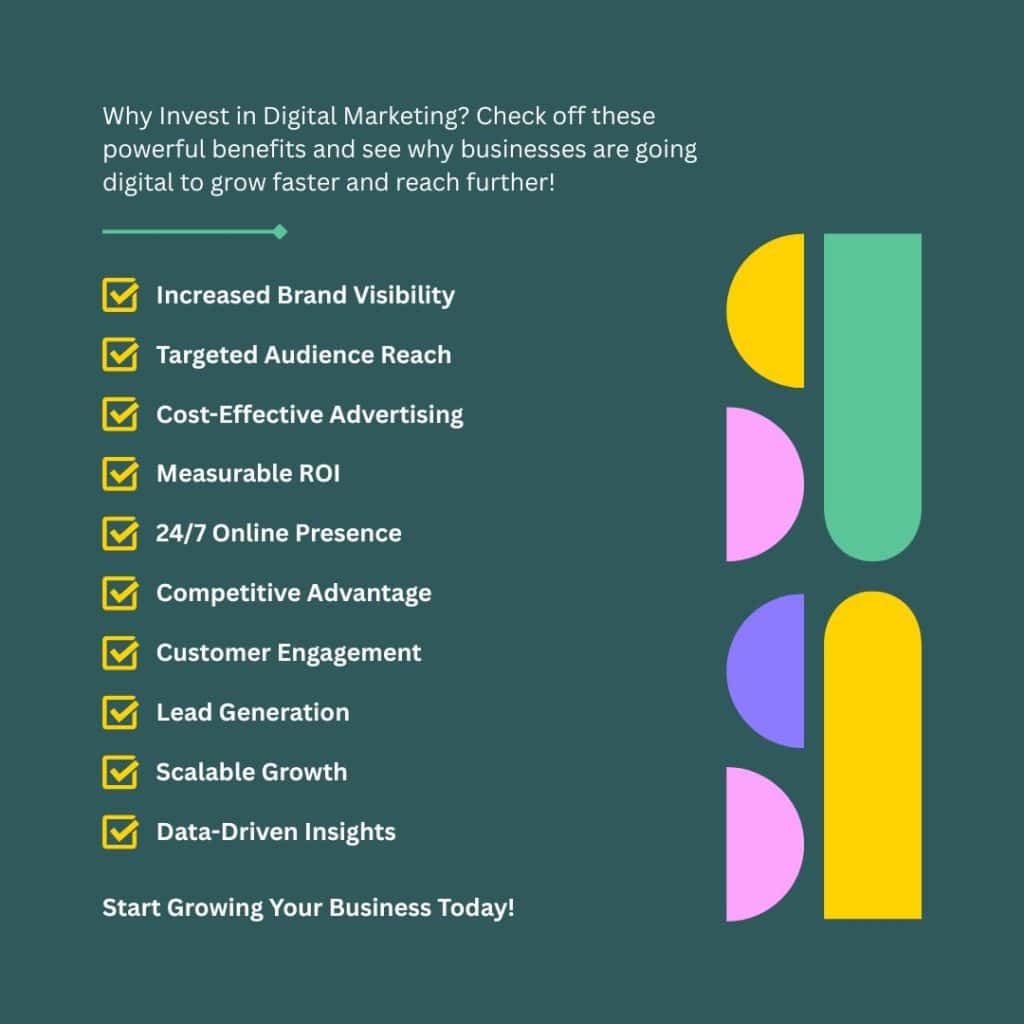
A strong call-to-action removes confusion.
Common Digital Marketing Mistakes Nonprofits Should Avoid
Even mission-driven organizations can struggle online if the strategy is unclear.
Avoid these common mistakes.
Trying to Reach Everyone
Your message becomes weaker when you try to speak to everyone at once.
Instead, create content for specific groups:
- Donors
- Volunteers
- Community partners
- Sponsors
- Local families
- Program participants
Each group has different needs and motivations.
Only Posting When You Need Money
If every message asks for donations, supporters may tune out.
Balance your content with:
- Education
- Gratitude
- Impact updates
- Stories
- Behind-the-scenes posts
- Community resources
Give value before you ask for support.
Having a Confusing Website
A confusing website can cost your nonprofit donations, signups, and trust.
Make sure visitors can quickly answer:
- What does this nonprofit do?
- Who does it help?
- Why does it matter?
- How can I get involved?
- Where can I donate?
Clarity leads to action.
Not Tracking Results
Without tracking, it is hard to know what works.
Start by measuring:
- Website visits
- Donation page views
- Donation conversions
- Email signups
- Volunteer applications
- Social media engagement
- Event registrations
- Campaign revenue
You do not need to track everything at once. Focus on the numbers tied to your main goal.
Conclusion
Digital marketing helps nonprofits become easier to find, trust, and support. It connects your mission with the people who care enough to donate, volunteer, share, or partner with you.
Start with one goal, one audience, and one clear message. Then build from there with a strong website, helpful content, email marketing, social media, and simple tracking.
When your digital strategy supports your mission, your impact can grow far beyond your current reach.
FAQ Section
What is nonprofit digital marketing?
Nonprofit digital marketing is the use of online channels to promote a mission, attract supporters, raise donations, recruit volunteers, and build community engagement. It can include SEO, websites, email, social media, content marketing, and paid ads.
How digital marketing supports nonprofit organizations?
Digital marketing supports nonprofit organizations by increasing visibility, building trust, reaching donors, engaging volunteers, promoting events, and tracking campaign results. It helps nonprofits communicate their mission and make it easier for people to take action.
What digital marketing channels are best for nonprofits?
The best channels often include a strong website, SEO, email marketing, social media, content marketing, and campaign landing pages. Paid ads can also help when promoting events, fundraising drives, or urgent needs.
Do nonprofits need SEO?
Yes. SEO helps nonprofits appear in search results when people look for causes, volunteer opportunities, donation options, or community resources. It can bring long-term visibility without paying for every website visit.
How can nonprofits use social media effectively?
Nonprofits can use social media to share impact stories, thank donors, promote events, recruit volunteers, educate the community, and show behind-the-scenes work. The best posts are clear, human, and focused on the mission.
How often should a nonprofit send emails?
A nonprofit can start with one email per month. For active campaigns, events, or fundraising periods, weekly emails may be useful. The key is to send valuable updates, not just donation requests.
What should a nonprofit website include?
A nonprofit website should include a clear mission statement, donation page, volunteer page, program details, contact information, impact stories, event information, and newsletter signup form. It should also be mobile-friendly and easy to navigate.
Want to help your nonprofit or mission-driven brand reach more people online?
I can help you create SEO-friendly website content, landing pages, blog posts, digital marketing strategies, and clear messaging that turns awareness into action.
Contact me today or view my services to build a stronger digital presence for your mission.