
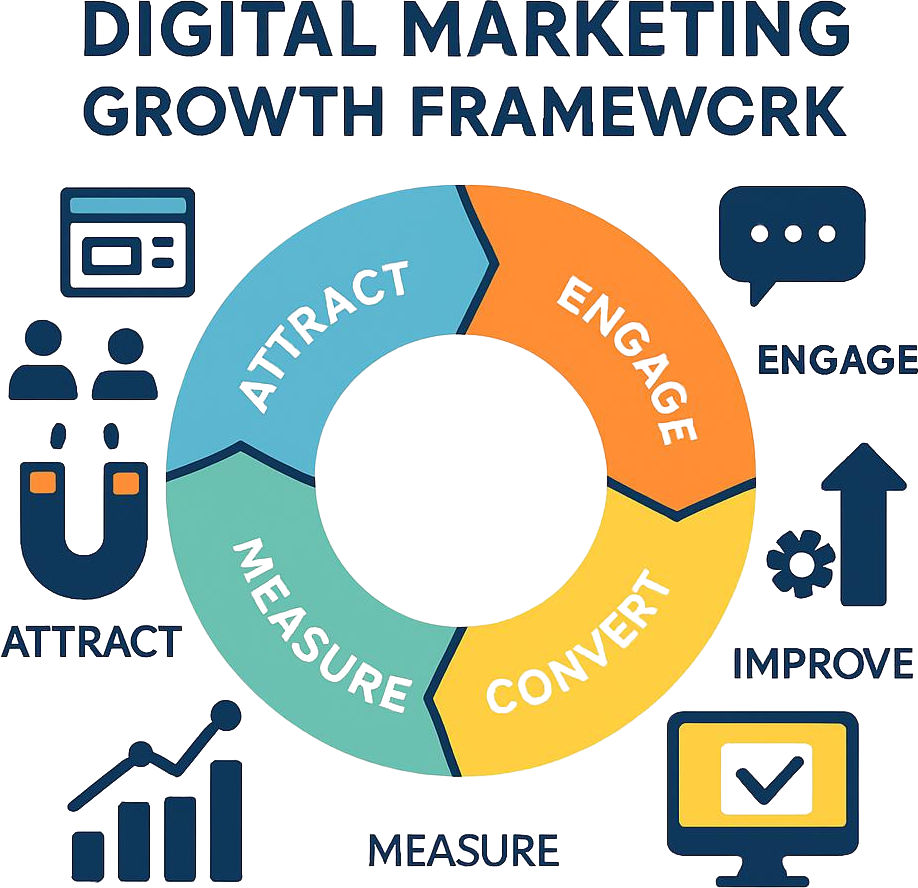
If you have ever wondered what does a digital marketer do, the simple answer is this: a digital marketer helps businesses attract, engage, and convert customers online. They use channels like search engines, websites, social media, email, paid ads, and content to help a brand grow.
But the role is much bigger than “posting on social media” or “running ads.”
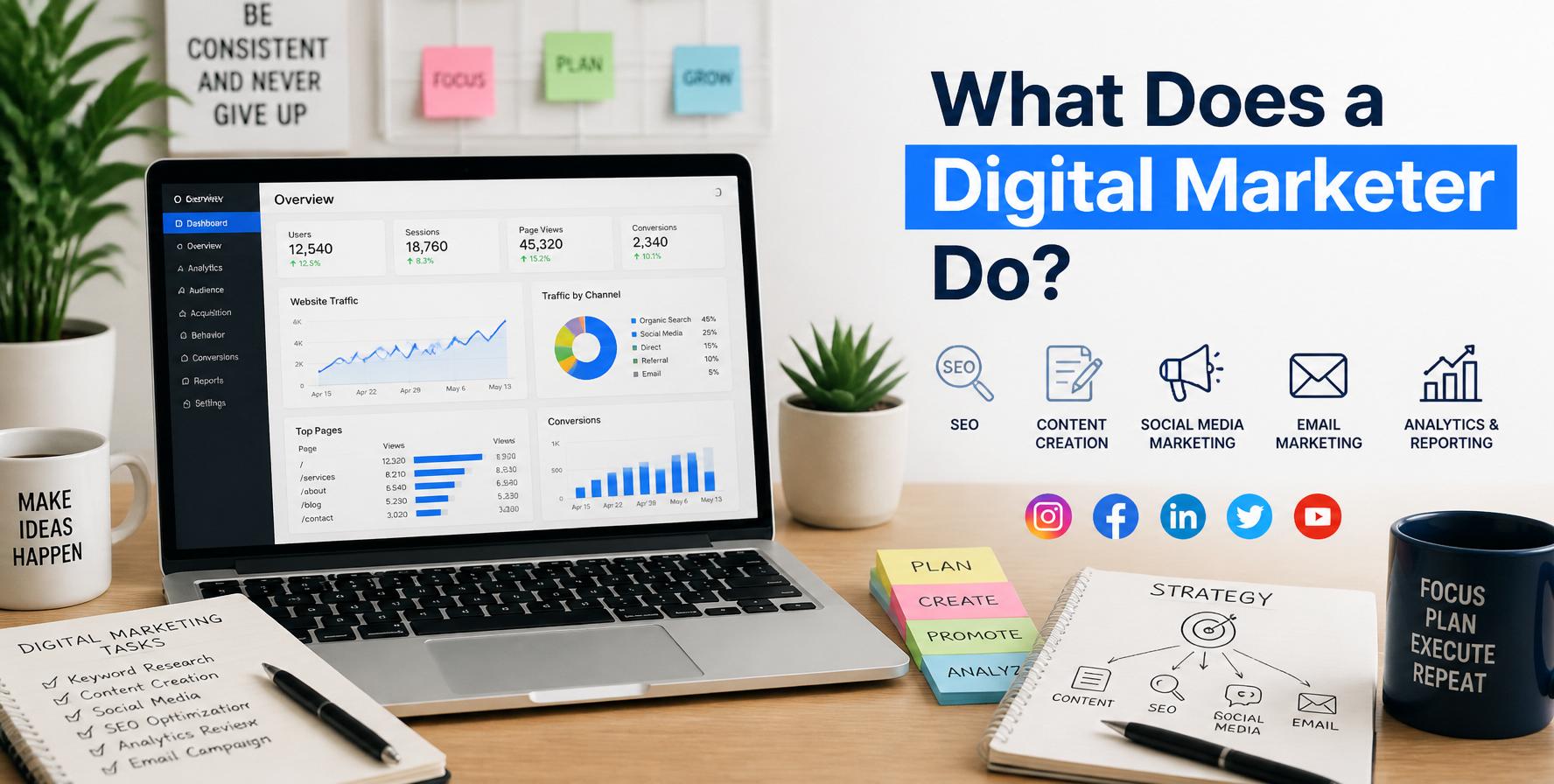
A good digital marketer understands strategy, customer behavior, data, content, SEO, user experience, and conversion. Their job is to connect the right message with the right people at the right time.
For small business owners, startups, and beginners, understanding digital marketing can help you make smarter decisions, hire better talent, and grow your business with more confidence.
A digital marketer promotes a business online using different marketing channels and strategies. Their goal is to increase visibility, drive traffic, generate leads, and improve sales.
They may work on:
For example, if you own a local web design business, a digital marketer may help you rank on Google for “web design services near me,” create helpful blog posts, run Facebook ads, improve your website pages, and track which leads turn into paying clients.
In short, digital marketers help turn online attention into business results.
Most customers research online before they buy, book, call, or visit a business. If your brand is hard to find online, you may lose customers to competitors who show up first.
Digital marketing helps your business:
For startups and small businesses, this matters because every dollar counts. Digital marketing allows you to target specific audiences, test campaigns, and improve over time.

Instead of guessing, you can use data to make better decisions.
The responsibilities of a digital marketer depend on the business, industry, goals, and team size. In a small business, one marketer may handle several tasks. In a larger company, different specialists may manage separate channels.
Here are the most common responsibilities.
Before launching campaigns, a digital marketer builds a clear plan.
This strategy usually includes:
For example, a startup selling online courses may need a strategy focused on SEO, email marketing, YouTube content, and retargeting ads.
A local service business may need a strategy focused on Google Business Profile, local SEO, review generation, and landing pages.
The right strategy depends on where the customers are and how they make decisions.
Digital marketing works best when you know who you are trying to reach.
A digital marketer studies:
For example, a beginner searching for “how to build a website for my business” may not be ready to hire right away. But a person searching for “affordable web design services for small business” may be closer to becoming a client.
Understanding this difference helps marketers create better content and campaigns.
Your website is often the center of your digital marketing. It is where people learn about your brand, read your content, view your services, and contact you.
A digital marketer may help improve:
For example, if your website gets traffic but few people contact you, the issue may not be traffic. It may be unclear messaging, weak calls to action, poor page layout, or a slow website.
A digital marketer looks at the full journey and finds ways to improve results.
Search engine optimization, or SEO, helps your website appear in search results when people look for products, services, or information.
A digital marketer working on SEO may handle:
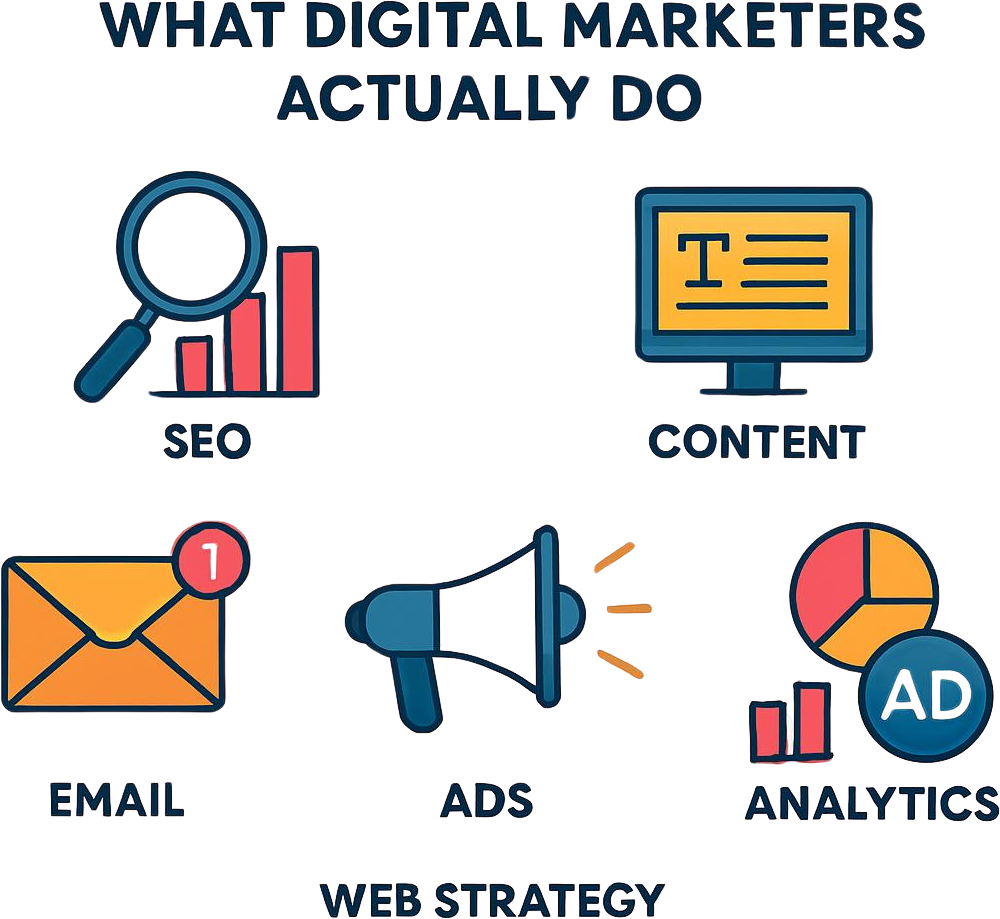
For example, a marketing website may publish helpful articles around topics like:
SEO is a long-term strategy, but it can bring steady traffic and leads when done well.
Content marketing is about creating useful content that attracts and educates your audience.
This can include:
Good content answers real questions and builds trust.
For example, if you offer SEO services, a helpful blog post explaining “how long SEO takes to work” can bring in business owners who are already thinking about improving their search rankings.
Content also supports other channels. A blog post can be shared on LinkedIn, turned into an email, used in a sales conversation, or repurposed into social media posts.
Social media marketing helps brands connect with people on platforms like Facebook, Instagram, LinkedIn, X, Pinterest, TikTok, and YouTube.
A digital marketer may use social media to:
For example, a web designer may post before-and-after website redesigns on Instagram, share business tips on LinkedIn, and use Pinterest to drive traffic to blog posts.
The goal is not just to “be active.” The goal is to use each platform with a clear purpose.
Email marketing allows businesses to build direct relationships with leads and customers.
A digital marketer may create:
For example, a startup may offer a free checklist called “10 Website Fixes That Increase Leads.” When someone downloads it, they join an email sequence that offers more tips and introduces the company’s services.
Email is powerful because you are not fully dependent on social media algorithms or paid ads.
Paid advertising helps businesses reach targeted audiences faster.
Common paid ad platforms include:
A digital marketer may manage:
For example, a local service business may run Google Ads for high-intent searches like “emergency plumber near me” or “small business website designer.”
Paid ads can work well, but they need careful tracking. Without a strong landing page and a clear offer, ad spend can disappear quickly.
A digital marketer should not rely on guesswork. They use data to understand what is working and what needs improvement.
They may track:
For example, if a blog post gets a lot of traffic but no leads, the marketer may add a stronger call to action, improve internal links, or offer a relevant free resource.
Data helps marketers improve campaigns over time.
Here is a simple breakdown of common digital marketing channels and how they support business growth.
| Channel | Main Purpose | Example Use |
| SEO | Get organic traffic from search engines | Rank for service-related keywords |
| Content Marketing | Educate and attract potential customers | Publish helpful blog posts and guides |
| Social Media | Build awareness and engagement | Share tips, stories, offers, and updates |
| Email Marketing | Nurture leads and retain customers | Send newsletters and follow-up sequences |
| Paid Ads | Drive fast, targeted traffic | Run Google or Facebook ad campaigns |
| Website Optimization | Improve conversions | Update landing pages and calls to action |
| Analytics | Measure performance | Track traffic, leads, and sales |
Each channel can work alone, but the best results often happen when they work together.
Let’s say you own a small web design and SEO agency. You want more local clients, but your website is not bringing in enough leads.
A digital marketer may create a plan like this:
This creates a complete system instead of random marketing activity.
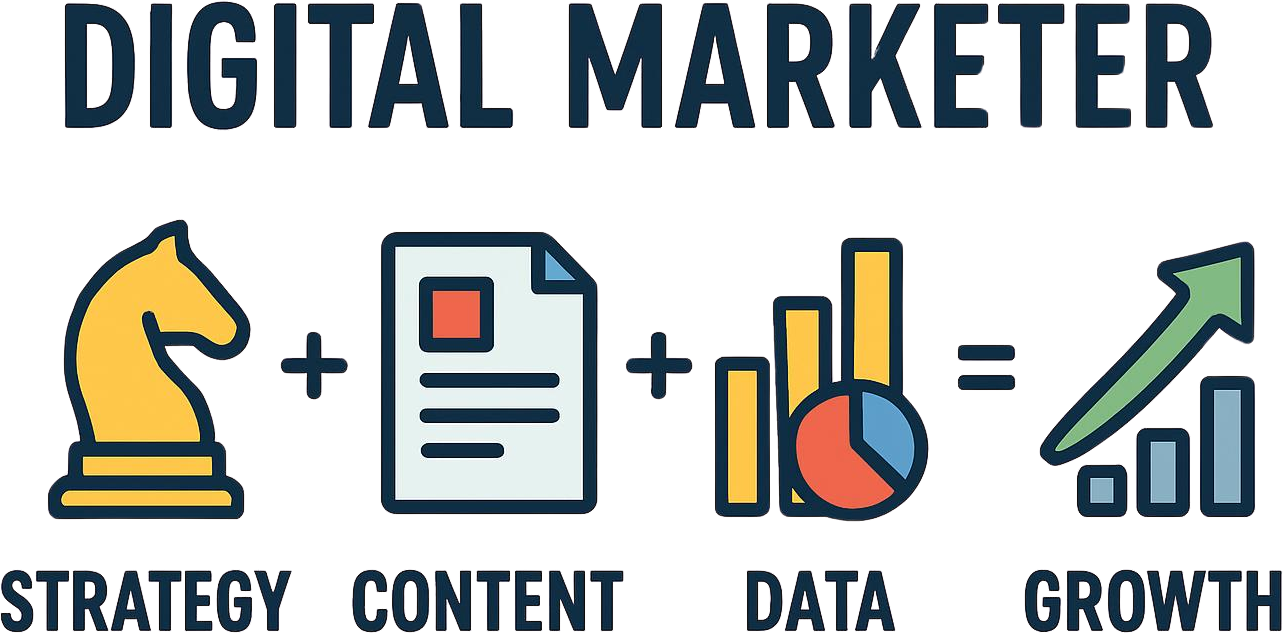
A strong digital marketer combines creativity, strategy, and data.
They need to understand business goals and turn them into a marketing plan.
Digital marketers often write website copy, ads, emails, landing pages, and social posts. Clear writing helps people take action.
Even if they are not full SEO specialists, they should understand keywords, search intent, content structure, and basic technical SEO.
They need to read reports, spot trends, and use numbers to improve campaigns.
Digital marketers work with business owners, designers, developers, writers, and sales teams. Clear communication matters.
Marketing needs fresh ideas, strong messaging, and content that stands out.
They do not need to be advanced developers, but they should feel comfortable using digital tools, website platforms, analytics dashboards, and marketing software.
Digital marketers use tools to plan, create, publish, track, and improve campaigns.
Common tools include:
The tool matters less than the strategy behind it. A skilled marketer knows how to use tools to make better decisions, not just collect data.
The terms can overlap, but there are small differences
A digital marketer may handle a wide range of online marketing tasks.
A digital marketing specialist often focuses on one area, such as:
For small businesses, hiring a general digital marketer can be helpful because they can manage the bigger picture. As your business grows, you may bring in specialists for deeper support.
Digital marketing is not just about visibility. It is about building a system that brings in the right people and turns them into customers.
A digital marketer can help your business:
For example, a strong SEO blog strategy may bring traffic for months or years. A good email sequence may turn cold leads into warm prospects. A well-built landing page may increase form submissions without increasing ad spend.
Small improvements across several areas can lead to major growth over time.
Hiring the right digital marketer can save you time, money, and stress. The wrong fit can lead to wasted budget and unclear results.
Look for someone who understands both strategy and execution.
A good digital marketer should be able to:
Before working with a digital marketer, ask:
A strong marketer will not promise overnight results. They will give you a clear plan, explain the process, and set realistic expectations.
You may benefit from hiring or working with a digital marketer if:
If you feel like your marketing is scattered, a digital marketer can help bring structure and direction.
A digital marketer may research keywords, review analytics, create content, manage ads, improve website pages, schedule social media posts, write emails, and track campaign performance. Their daily work depends on the business goals and active marketing channels.
What are the responsibilities of a digital marketer? Common responsibilities include building marketing strategies, improving website performance, managing SEO, creating content, running ads, handling email campaigns, managing social media, analyzing data, and improving lead generation.
No. Social media is only one part of digital marketing. Digital marketing can also include SEO, content marketing, email marketing, paid ads, website optimization, analytics, and conversion strategy.
Yes, many small businesses benefit from digital marketing support. A digital marketer can help small businesses get found online, attract better leads, improve their website, and create a clear growth strategy.
Digital marketing supports SEO through keyword research, content creation, website optimization, internal linking, local SEO, and performance tracking. SEO helps businesses earn organic traffic from search engines.
A digital marketer should understand strategy, copywriting, SEO, analytics, paid ads, content marketing, communication, customer behavior, and basic website optimization.
Yes. A digital marketer can improve website messaging, page structure, calls to action, SEO, user experience, landing pages, and conversion paths.
It depends on the strategy. Paid ads can bring traffic quickly, while SEO and content marketing often take several months to build momentum. A strong digital marketing plan usually combines short-term and long-term tactics.
A digital marketer often works across several online marketing channels. An SEO specialist focuses mainly on improving visibility in search engines. Both roles can work together to grow traffic and leads.
Track results such as website traffic, leads, sales, conversion rates, search rankings, email performance, ad costs, and customer acquisition costs. The best marketing is measured by business results, not just likes or impressions.
If you want more traffic, better leads, and a stronger online presence, the right digital marketing strategy can make a real difference.
Whether you need SEO, website improvements, content strategy, paid ads, or a complete growth plan, you do not have to figure it out alone.
Contact us today to discuss your goals, or view our digital marketing services to see how we can help your business grow online.