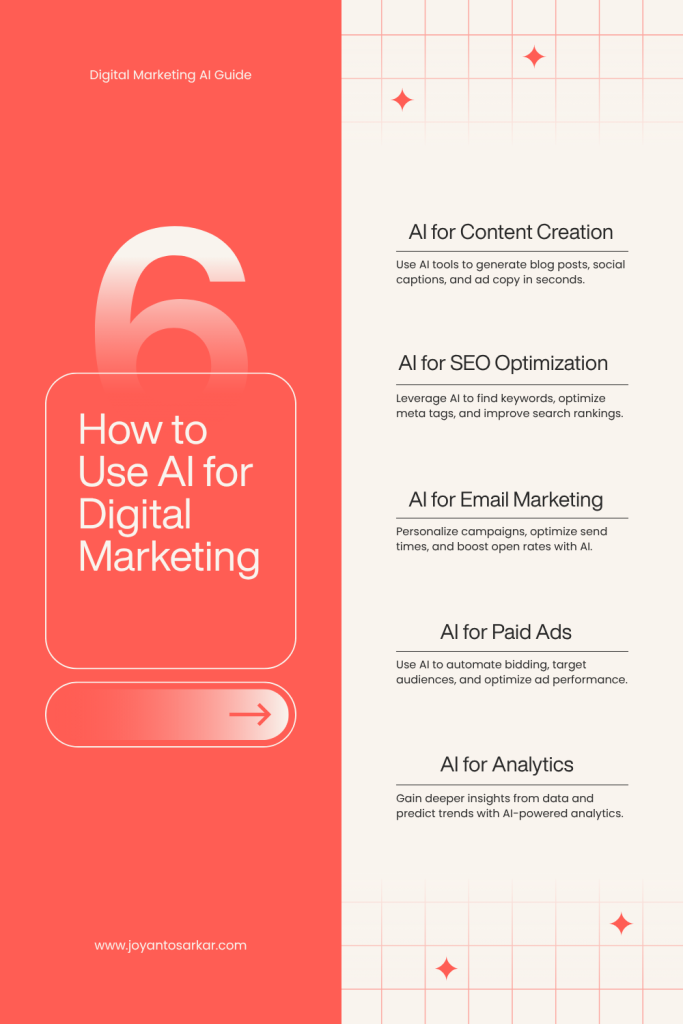
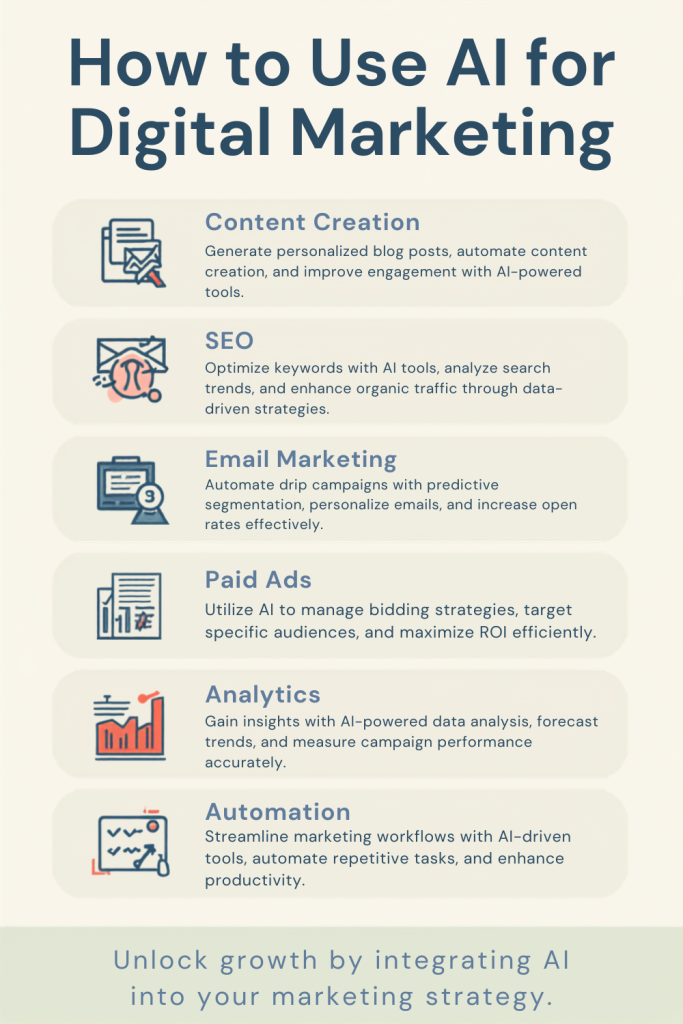
Learning how to use AI for digital marketing can help you save time, understand your audience better, and make smarter marketing decisions. But AI is not a magic button that replaces strategy. It works best when you use it to support your goals, improve your workflow, and make your campaigns more effective.
For small business owners, startups, marketers, and beginners, AI can feel both exciting and overwhelming. There are tools for writing, SEO, ads, email, analytics, customer service, design, and automation. The real challenge is knowing where to start.
In this guide, you’ll learn:
- What AI in digital marketing means
- How to use AI for content, SEO, email, ads, and analytics
- Which AI marketing tools can support your workflow
- Common mistakes to avoid
- How to build a simple AI-powered marketing strategy
Let’s break it down in a clear, practical way.
What Is AI in Digital Marketing?
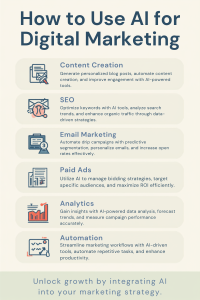
AI in digital marketing means using artificial intelligence tools and systems to improve marketing tasks, decisions, and results.
These tools can help with:
- Content ideas and outlines
- Blog writing support
- SEO research
- Social media planning
- Email personalization
- Paid ad optimization
- Customer insights
- Chatbots and customer support
- Data analysis
- Marketing automation
AI does not replace your brand voice, business knowledge, or customer relationships. Instead, it helps you work faster and make better decisions with the information you already have.
Simple Example of AI in Marketing
Imagine you run a web design and SEO business.
You could use AI to:
- Research blog topic ideas.
- Create an SEO content outline.
- Draft social media captions.
- Analyze website visitor behavior.
- Segment email subscribers.
- Suggest improvements for a landing page.
- Identify which campaigns bring the best leads.
That is the real value of AI: it helps you move from guesswork to smarter action.
So what? AI is most useful when it supports a clear marketing strategy, not when it is used randomly.
Why AI Matters for Small Businesses and Startups
Small businesses often have limited time, small teams, and tight budgets. AI can help you do more with less, especially when you use it for repeatable tasks.
Instead of spending hours on manual work, you can use AI to speed up research, planning, writing, reporting, and optimization.
Key Benefits of AI in Digital Marketing
AI can help you:
- Save time on repetitive marketing tasks
- Create content faster
- Improve SEO planning
- Personalize emails and offers
- Analyze customer behavior
- Optimize campaigns based on data
- Improve lead generation
- Respond to customers faster
- Make better marketing decisions
For beginners, this can be a major advantage. You do not need a large marketing department to start using AI in a smart way.
The Power of Using AI in Digital Marketing
The Power of Using AI in Digital Marketing comes from its ability to process information quickly, find patterns, and support better decisions.
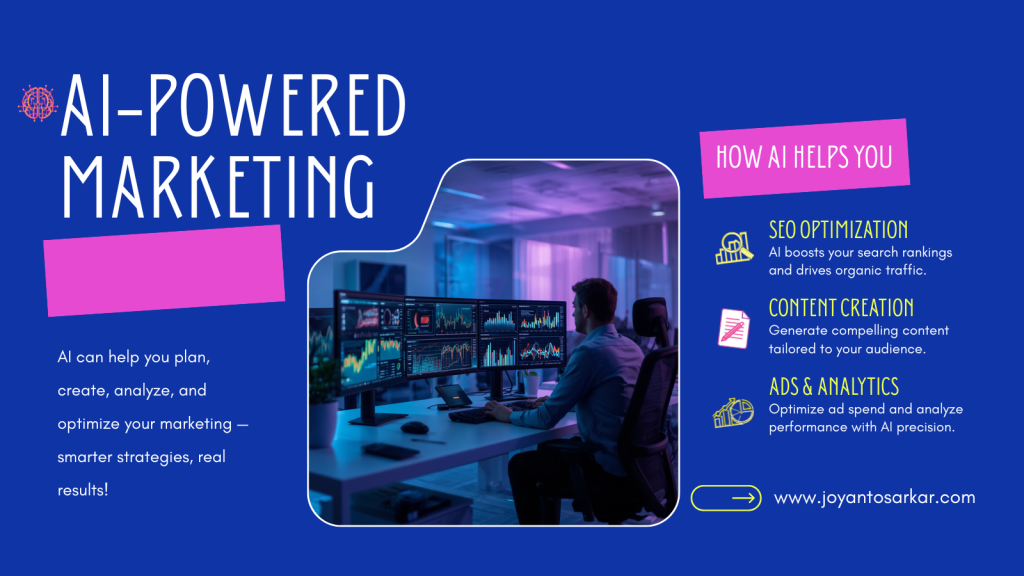
Traditional marketing often relies on manual research and slow testing. AI helps speed up that process.
For example, AI-powered analytics can help you understand:
- Which website pages get the most engagement
- Which keywords bring qualified visitors
- Which email subject lines perform better
- Which ads generate lower-cost leads
- Which audience segments are most likely to convert
This makes your marketing more focused and less wasteful.
AI Helps You Move Faster
Speed matters in digital marketing. If you can create, test, and improve campaigns faster, you can learn what works sooner.
AI can help you:
- Create first drafts faster
- Build campaign ideas in minutes
- Review large data sets quickly
- Find content gaps
- Improve ad copy variations
- Repurpose one blog post into several social posts
AI Helps You Personalize Marketing
Personalization means showing the right message to the right person at the right time.
AI can support personalization by helping you:
- Segment email lists
- Recommend products or services
- Adjust website experiences
- Send behavior-based email campaigns
- Create content for different customer groups
For example, a startup could send different email sequences to new leads, past buyers, and people who downloaded a free guide.
AI Helps You Make Data-Driven Decisions
Many businesses collect data but do not know what to do with it. AI can help turn that data into useful insights.
Instead of only asking, “How many people visited my website?” you can ask:
- Which traffic sources bring the best leads?
- Where do visitors drop off?
- Which pages need better calls to action?
- Which campaigns should we invest in next?
So what? AI helps you improve speed, personalization, and decision-making, but you still need human judgment to guide the strategy.
How to Use AI for Digital Marketing Step by Step
If you are new to AI, start simple. You do not need to use every tool at once.
Here is a practical step-by-step approach.
1. Use AI for Audience Research
Strong marketing starts with understanding your audience. AI can help you organize customer insights and identify patterns.
You can use AI to explore:
- Customer pain points
- Common questions
- Buying objections
- Content ideas
- Audience segments
- Search intent
- Customer journey stages
Example Prompt
You could ask an AI tool:
“Create a customer profile for a small business owner looking for SEO and web design services. Include goals, pain points, objections, and content topics they may care about.”
This can give you a useful starting point. Then you can refine it based on real customer conversations and analytics.
What to Do Next
Use AI to create basic customer personas, but validate them with real data from:
- Sales calls
- Website analytics
- Customer reviews
- Contact form questions
- Social media comments
- Email replies
AI can guide your thinking, but your customers should shape your final strategy.
2. Use AI for SEO Research and Content Planning
AI can support SEO by helping you find topics, organize ideas, and create content briefs.
It can help with:
- Keyword clustering
- Search intent analysis
- Blog topic ideas
- Content outlines
- Title suggestions
- Meta descriptions
- FAQ ideas
- Internal linking suggestions
However, AI should not replace proper SEO thinking. You still need to choose keywords based on relevance, competition, business value, and user intent.
AI SEO Example
If your website offers digital marketing services, AI could help you plan content around topics like:
- How to improve website traffic
- SEO tips for small businesses
- How to use AI for digital marketing
- Digital marketing strategy for startups
- Website design mistakes to avoid
- How to improve conversion rates
Each topic can support your larger SEO strategy.
AI SEO Workflow
Use this simple workflow:
- Choose a main keyword.
- Ask AI for related subtopics.
- Review search intent.
- Create an outline.
- Add practical examples.
- Write or edit the draft.
- Optimize headings and metadata.
- Add internal links.
- Review for accuracy and originality.
- Publish and monitor performance.
So what? AI can make SEO planning faster, but your final content should still be useful, accurate, and written for humans.
3. Use AI for Content Creation
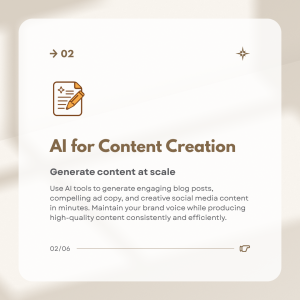
AI content creation is one of the most popular uses of artificial intelligence in marketing. It can help you create drafts, outlines, captions, headlines, emails, and content ideas.
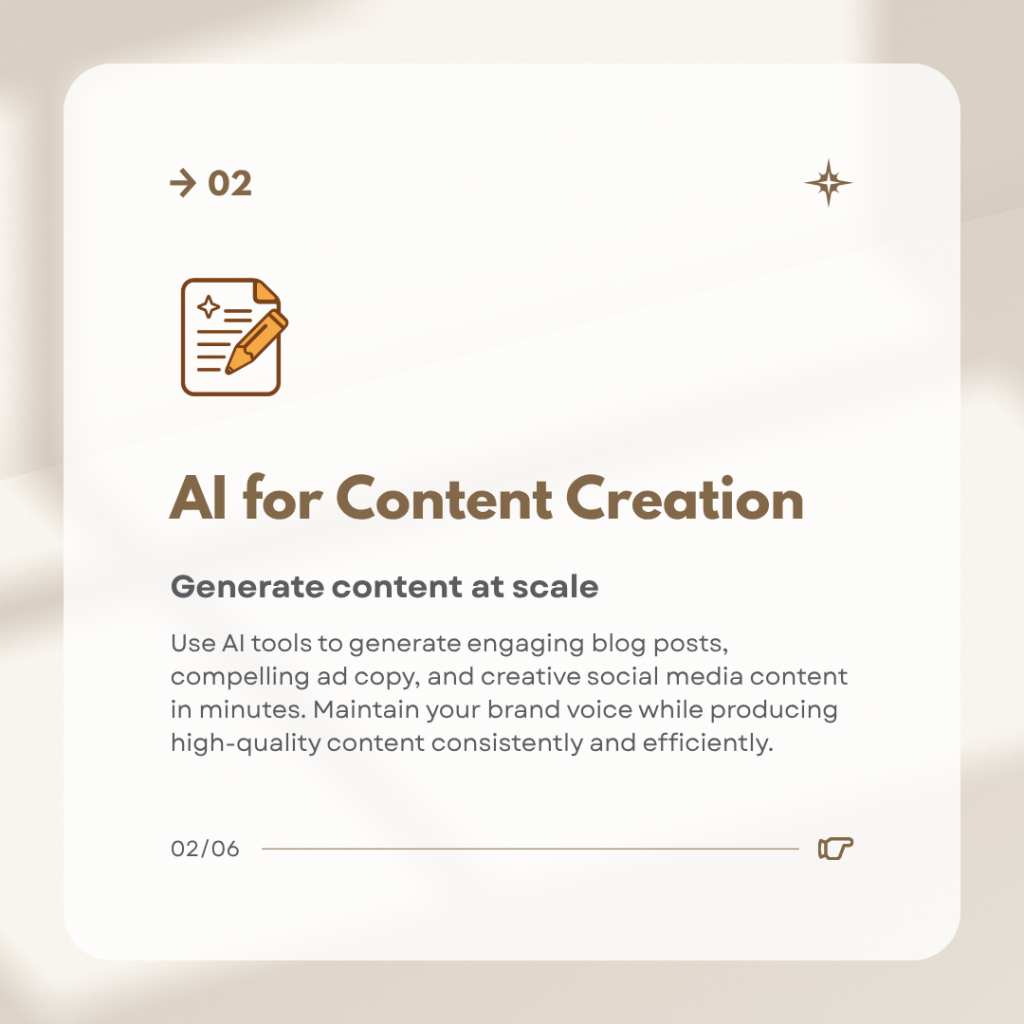
But the best results come when you treat AI as a writing assistant, not a complete replacement for your voice.
AI Can Help Create:
- Blog outlines
- Blog introductions
- Social media captions
- Email newsletters
- Video scripts
- Ad copy variations
- Landing page sections
- Product descriptions
- FAQ answers
- Content calendars
Where Human Editing Matters
AI can write quickly, but it may miss details that matter to your brand.
You should always check for:
- Accuracy
- Tone
- Brand voice
- Originality
- Helpful examples
- Clear calls to action
- SEO quality
- Customer relevance
Practical Example
A marketing consultant could use AI to turn one blog post into:
- 5 LinkedIn posts
- 3 Instagram captions
- 1 email newsletter
- 1 short video script
- 1 checklist
- 1 FAQ section
This saves time and helps each piece of content work harder.
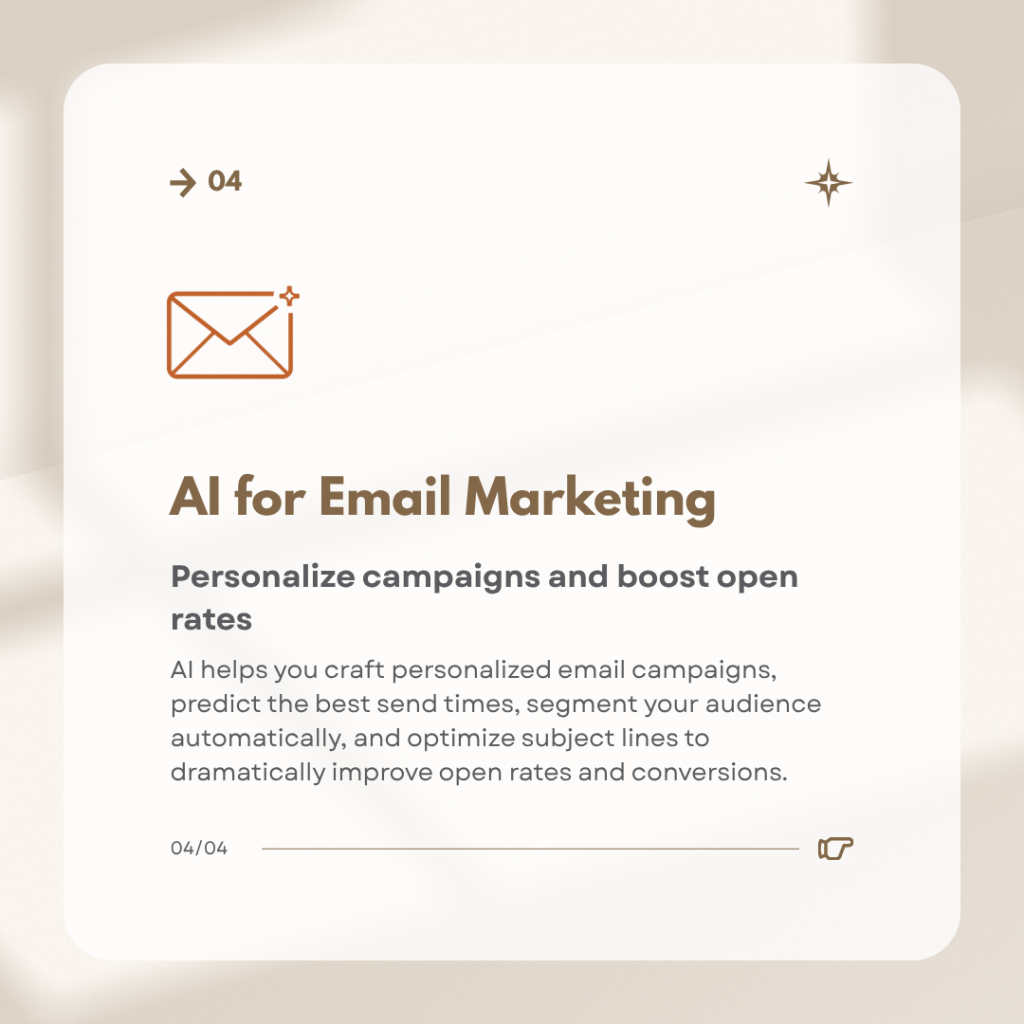
4. Use AI for Email Marketing
Email marketing is still one of the strongest digital marketing channels, especially when you want to nurture leads and stay connected with your audience.
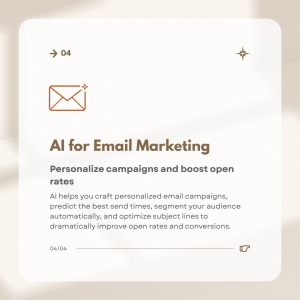
AI can help you improve email marketing by supporting:
- Subject line ideas
- Welcome sequences
- Segmentation
- Personalization
- Send-time optimization
- Product or service recommendations
- Re-engagement campaigns
Example Email Sequence
If someone downloads a free SEO checklist from your website, AI can help you build a follow-up sequence:
- Email 1: Deliver the checklist and introduce your brand.
- Email 2: Explain common SEO mistakes.
- Email 3: Share a client example or helpful tip.
- Email 4: Invite the reader to book a consultation.
- Email 5: Answer common objections.
This helps turn a simple email signup into a warmer lead.
Email Personalization Example
Instead of sending the same message to everyone, AI can help segment your list by interest.
For example:
| Audience Segment | Email Focus |
| Startup founders | Growth strategy, landing pages, lead generation |
| Local businesses | Local SEO, Google Business Profile, reviews |
| eCommerce brands | Product pages, abandoned carts, email offers |
| Service providers | Website conversions, content marketing, SEO |
So what? AI can make email marketing more personal and relevant, which can lead to better engagement and more conversions.
5. Use AI for Social Media Marketing
Social media can take a lot of time. AI can help you plan, write, repurpose, and improve your posts.
You can use AI for:
- Content calendars
- Caption ideas
- Hashtag research
- Post variations
- Carousel outlines
- Short video scripts
- Engagement prompts
- Repurposing blog content
Practical Social Media Workflow
Here is a simple AI-powered workflow:
- Choose one blog post or topic.
- Ask AI to create 5 social post angles.
- Select the strongest ideas.
- Edit the captions in your own voice.
- Create visuals that match your brand.
- Schedule the posts.
- Track engagement and clicks.
Example
A blog post about “how to use AI for digital marketing” could become:
- A LinkedIn post about AI and marketing strategy
- An Instagram carousel about AI tools
- A Facebook post for small business owners
- An X post with a quick AI marketing tip
- A Pinterest pin about AI content planning
This helps you get more value from each piece of content.
6. Use AI for Paid Ads and Campaign Optimization
Paid ads can generate fast visibility, but they can also waste money if your targeting, offer, or landing page is weak.
AI can help with campaign optimization by supporting:
- Audience research
- Ad copy testing
- Keyword grouping
- Bid optimization
- Creative variations
- Performance analysis
- Retargeting ideas
- Budget recommendations
Many ad platforms already use AI to improve delivery and targeting. But you still need to guide the campaign with clear goals.
AI Ad Optimization Example
If you run ads for a web design service, AI can help you test different messages:
- “Get a website that turns visitors into leads.”
- “Professional web design for growing small businesses.”
- “Improve your website, SEO, and online presence.”
- “Launch a modern website built for conversions.”
Over time, you can compare which message gets better leads, not just more clicks.
Paid Ads Checklist
Before using AI to scale paid ads, make sure you have:
- A clear offer
- A focused landing page
- Conversion tracking
- A defined audience
- Strong calls to action
- Lead follow-up process
- Budget limits
- Performance review schedule
So what? AI can help optimize paid campaigns, but it cannot fix a weak offer or confusing landing page.
7. Use AI-Powered Analytics for Better Decisions
AI-powered analytics can help you understand your marketing performance faster.
Instead of manually reviewing every report, AI can help identify trends, gaps, and opportunities.
You can use AI-powered analytics to answer questions like:
- Which campaigns bring the best leads?
- Which website pages need improvement?
- Which traffic sources convert best?
- Which content topics perform well?
- Which audience segments are most valuable?
- Where are users dropping off?
Beginner-Friendly Metrics to Track
| Metric | Why It Matters |
| Website traffic | Shows how many people visit your site |
| Conversion rate | Shows how many visitors take action |
| Cost per lead | Shows how much each lead costs |
| Lead quality | Shows whether leads are a good fit |
| Email open rate | Shows subject line and audience interest |
| Click-through rate | Shows whether people engage with your content |
| Revenue by channel | Shows which channels drive business results |
Practical Example
If AI analytics shows that your blog posts bring traffic but few leads, the issue may not be your content. It may be your calls to action, service page links, or lead magnets.
You could improve results by adding:
- Clear CTAs inside blog posts
- Internal links to service pages
- Downloadable checklists
- Contact forms
- Consultation booking buttons
Best AI Marketing Tools by Use Case
There are many AI marketing tools available. The best tool depends on your goals, budget, and workflow.
Here is a simple breakdown by use case.
| Use Case | How AI Helps |
| Content creation | Drafts blogs, captions, emails, and outlines |
| SEO | Helps with keyword ideas, content briefs, and optimization |
| Analytics | Finds patterns in campaign and website data |
| Email marketing | Supports segmentation, personalization, and automation |
| Paid ads | Helps test copy, audiences, and campaign performance |
| Customer support | Powers chatbots and quick responses |
| Design support | Helps create creative concepts and visual ideas |
| CRM and sales | Helps score leads and improve follow-up |
How to Choose the Right AI Tools
Before choosing a tool, ask:
- What problem do I need to solve?
- Will this tool save time or improve results?
- Does it fit my current workflow?
- Is it beginner-friendly?
- Can I measure its impact?
- Does it protect customer data?
- Will my team actually use it?
Do not choose AI tools just because they are popular. Choose tools that support your business goals.
How to Build an AI-Powered Digital Marketing Strategy
AI works best when it is part of a clear strategy. Without direction, it can create more noise instead of better results.
Use this simple framework.
Step 1: Define Your Marketing Goal
Choose one main goal first.
Examples:
- Increase qualified leads
- Improve SEO traffic
- Grow email subscribers
- Lower cost per lead
- Improve website conversions
- Create content more consistently
Step 2: Identify the Bottleneck
Ask yourself:
- Do we need more traffic?
- Do we need better content?
- Do we need stronger follow-up?
- Do we need better targeting?
- Do we need better reporting?
- Do we need a higher-converting website?
AI should help solve a real problem.
Step 3: Choose One AI Use Case
Start with one area, such as:
- AI content planning
- AI email automation
- AI-powered analytics
- AI SEO research
- AI social media repurposing
- AI customer support
Avoid trying to automate everything at once.
Step 4: Create a Human Review Process
Every AI-assisted task should still include human review.
Check for:
- Accuracy
- Brand fit
- Customer relevance
- Clear messaging
- Ethical use
- Data privacy
- Quality
Step 5: Measure Results
Track whether AI is helping.
Look at:
- Time saved
- Content output
- Website traffic
- Lead quality
- Conversion rates
- Email engagement
- Campaign performance
- Revenue impact
So what? A simple AI strategy is better than a large collection of tools with no clear purpose.
Common Mistakes to Avoid When Using AI in Marketing
AI can help your marketing, but it can also create problems if used carelessly.
Here are the biggest mistakes to avoid.
Mistake 1: Publishing AI Content Without Editing
AI-generated content can sound generic if you do not edit it.
Fix: Add your own experience, examples, opinions, and brand voice.
Mistake 2: Replacing Strategy With Tools
AI tools are useful, but they do not create a full marketing strategy on their own.
Fix: Start with goals, audience, offer, and customer journey before using AI.
Mistake 3: Ignoring Accuracy
AI can produce wrong or outdated information.
Fix: Review facts, claims, examples, and recommendations before publishing.
Mistake 4: Over-Automating Customer Communication
Automation can save time, but too much automation can feel cold.
Fix: Use automation for speed, but keep human connection where it matters.
Mistake 5: Using AI Without Tracking Results
If you do not measure performance, you will not know whether AI is helping.
Fix: Track time saved, leads, conversions, traffic, and campaign performance.
Mistake 6: Losing Your Brand Voice
AI can make many brands sound similar.
Fix: Build a clear brand voice guide and edit AI content to match your style.
Practical AI Marketing Examples for Small Businesses
Here are a few ways different businesses can use AI.
Local Service Business
A local cleaning company could use AI to:
- Write local SEO blog topics
- Create service page outlines
- Draft Google Business Profile updates
- Respond to common customer questions
- Analyze which pages bring quote requests
- Build email follow-ups after inquiries
Web Designer or SEO Consultant
A consultant could use AI to:
- Create content briefs
- Build blog outlines
- Repurpose articles into social posts
- Review landing page messaging
- Draft email newsletters
- Analyze lead sources
Startup
A startup could use AI to:
- Test landing page copy
- Create customer personas
- Build onboarding emails
- Analyze user feedback
- Generate ad copy variations
- Identify high-performing channels
eCommerce Brand
An online store could use AI to:
- Write product descriptions
- Personalize product recommendations
- Segment customers by purchase behavior
- Improve abandoned cart emails
- Analyze best-selling products
- Forecast customer demand
Quick Checklist: How to Use AI for Digital Marketing
Use this checklist to get started:
- Define one clear marketing goal.
- Identify your biggest bottleneck.
- Choose one AI use case to test.
- Use AI for research, planning, or first drafts.
- Add human editing and strategy.
- Track performance before and after using AI.
- Keep your brand voice consistent.
- Protect customer data.
- Avoid over-automation.
- Improve your workflow over time.
If you are just starting, begin with content planning, SEO research, or email support. These are simple, useful ways to test AI without overwhelming your business.
Conclusion
Knowing how to use AI for digital marketing can give your business a real advantage. AI can help you create content faster, improve SEO planning, personalize emails, analyze campaign data, and optimize marketing performance.
But the best results come when AI supports a clear strategy. Start with your audience, goals, website, content, and customer journey. Then use AI to improve the parts of your marketing that take too much time or need better insights.
AI is not here to replace smart marketing. It is here to make smart marketing easier, faster, and more effective.
FAQ Section
What is AI in digital marketing?
AI in digital marketing means using artificial intelligence tools to support marketing tasks such as content creation, SEO research, email automation, customer insights, analytics, paid ads, and personalization.
How can beginners use AI for digital marketing?
Beginners can start by using AI for blog outlines, social media captions, email drafts, keyword ideas, customer research, and simple campaign planning. Start with one use case before adding more tools.
Can AI improve SEO?
Yes. AI can help with keyword ideas, content outlines, search intent research, meta descriptions, internal linking ideas, and content updates. However, human editing is still important for quality and accuracy.
Is AI content good for marketing?
AI content can be useful when it is edited and improved by a human. The best AI-assisted content includes real examples, clear expertise, brand voice, and helpful insights.
What are the best uses of AI in digital marketing?
Some of the best uses include content planning, SEO research, email personalization, AI-powered analytics, campaign optimization, customer support chatbots, and social media repurposing.
Can AI replace digital marketers?
AI can automate some tasks, but it cannot fully replace digital marketers. Strategy, creativity, customer understanding, brand positioning, and decision-making still need human input.
How does AI help small businesses?
AI helps small businesses save time, create content faster, understand customers better, improve follow-up, automate repetitive tasks, and make smarter marketing decisions with limited resources.
What should I avoid when using AI for marketing?
Avoid publishing unedited AI content, relying on AI without strategy, ignoring accuracy, over-automating customer communication, and using tools without tracking results.
How do AI-powered analytics help marketing?
AI-powered analytics can help identify trends, track campaign performance, find weak points in your funnel, and show which channels, pages, or campaigns produce the best results.
What is the first AI marketing task I should try?
Start with content planning or SEO research. These tasks are beginner-friendly and can quickly help you organize ideas, create better content, and improve your digital marketing workflow.
Need Help Using AI in Your Digital Marketing Strategy?
AI can save time, improve insights, and support better marketing results — but only when it is connected to the right strategy.
If you need help with SEO, website design, content planning, automation, or AI-powered digital marketing, I can help you build a clear plan that fits your business goals.
Contact me today or view my services to start using AI for smarter digital growth.