Traffic alone doesn’t pay the bills; sales do. Learning how to increase sales through SEO means moving past chasing visitors and focusing on the people most likely to buy. SEO, or search engine optimization, is the practice of getting your website to show up when people search for what you offer. For small business owners, startups, and students learning digital marketing, this skill turns free search traffic into a steady stream of customers.
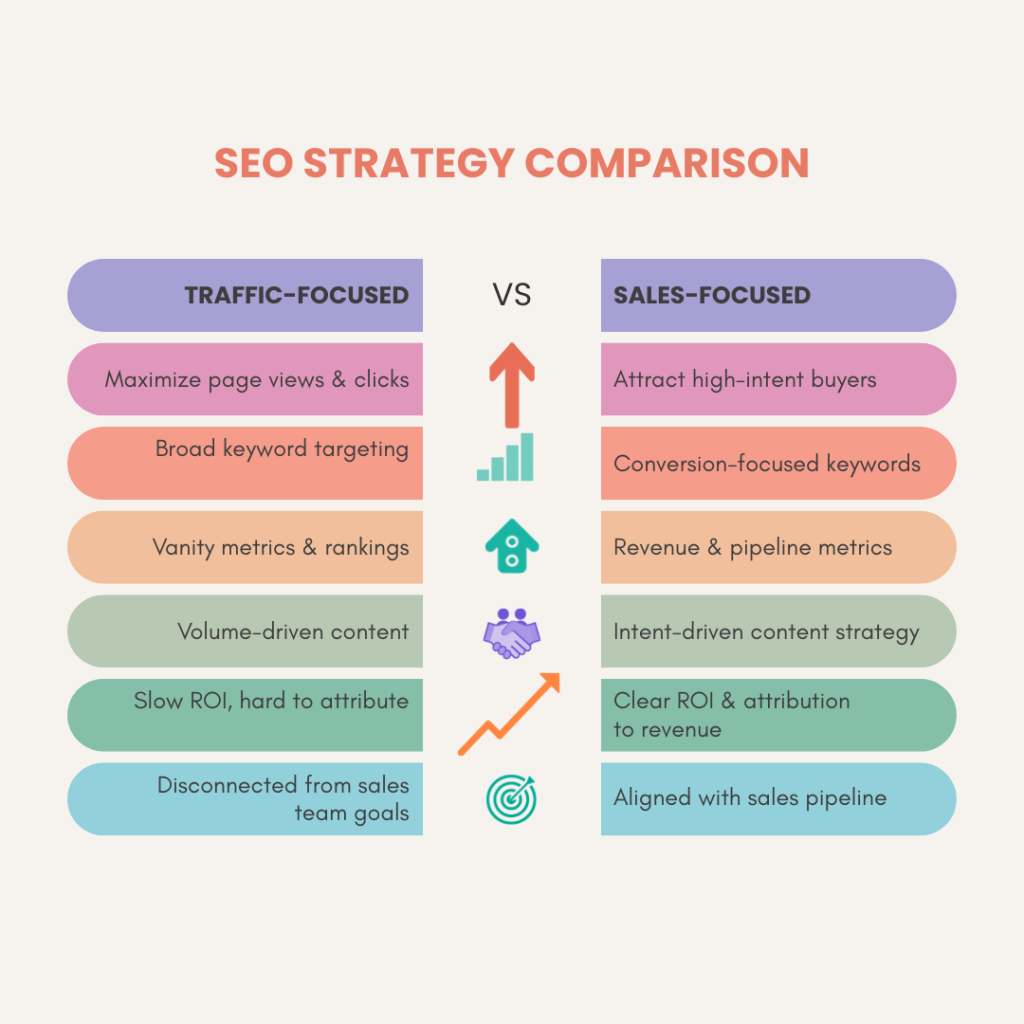
Here’s the core idea: SEO works best when it targets buyers, not just browsers. The right keywords, the right pages, and a smooth path to checkout all matter more than raw visitor numbers.
By the end of this guide, you’ll have 7 ways to increase sales using SEO, with examples you can apply this week. Let’s get into it.
Why SEO Drives Sales (Not Just Traffic)
SEO connects you to people already looking for what you sell. That’s what makes it different from interrupting people with ads; your customers come to you.
How it works: Someone types a question or product into Google. If your page answers that intent well, you appear in the results, earn the click, and guide them toward a purchase.
The benefit: You attract buyers with high intent people who are actively searching to solve a problem or make a purchase.
The limitation: SEO takes time. Most pages need weeks or months to rank, so treat it as a long-term investment, not a quick fix.
7 Ways to Increase Sales Using SEO
Each step below builds on the last. Start with the first few if you’re new, then layer in the rest as you grow more comfortable.
1. Target Buyer-Intent Keywords
Not all search terms lead to sales. The goal is to find keywords that signal someone is ready to buy.
Search intent falls into a few groups:
- Informational: “What is email marketing?” — learning, not buying yet.
- Commercial: “best email marketing tool for small business” — comparing options.
- Transactional: “buy email marketing software” — ready to purchase.
Where to focus: Commercial and transactional keywords sit closest to a sale, so prioritize them for product and service pages.
Example: A bakery ranking for “order custom birthday cakes near me” will earn more sales than one ranking for “history of birthday cakes.”
2. Optimize Your Product and Service Pages
Your money pages, the ones that actually sell, deserve the most attention. These are the pages that turn a visitor into a customer.
- Use a clear, keyword-focused page title and heading.
- Write descriptions that explain benefits, not just features.
- Add real photos, reviews, and trust signals.
- Include one obvious call to action (“Add to Cart,” “Book Now”).
A note on balance: Write for people first, search engines second. Stuffing keywords unnaturally hurts both rankings and trust.
3. Improve Page Speed and Mobile Experience
A slow page loses sales before a visitor ever sees your offer. Speed and mobile-friendliness directly affect both rankings and conversions.
How it works: Google favors fast, mobile-ready sites, and shoppers abandon pages that take too long to load.
- Compress large images.
- Remove unused plugins or scripts.
- Use a mobile-responsive design that adjusts to any screen.
Example: An online store cuts its load time from six seconds to two. More visitors stay, and abandoned carts drop.
4. Create Content That Answers Buyer Questions
Helpful content builds trust and pulls people closer to a purchase. When you answer the questions buyers ask before they spend money, you earn their confidence.
- Write comparison guides (“X vs. Y”).
- Answer common pre-purchase questions.
- Create “how to choose” buying guides.
The benefit: You capture searchers in the research phase and guide them toward your product as the answer.
Beginner tip: Link these helpful articles directly to your product pages. This sends interested readers toward the next step.
5. Use Local SEO to Capture Nearby Buyers
If you serve a specific area, local SEO connects you to customers ready to act. Local searches often carry strong buying intent. People searching nearby usually want to visit or order soon.
- Claim and complete your Google Business Profile.
- Keep your name, address, and phone consistent everywhere.
- Collect and respond to customer reviews.
Example: A search for “plumber near me” often leads to a same-day call. Showing up there means showing up at the moment of need.
6. Build Trust With Reviews and Social Proof
People buy from small businesses that they trust, and reviews build that trust fast. Search engines also use review signals when ranking local results.
- Ask happy customers for reviews after a purchase.
- Display star ratings on product pages.
- Add testimonials near your call to action.
The downside to watch: Never fake reviews. It erodes trust and can violate platform rules.
7. Track, Test, and Refine
SEO that drives sales improves over time through measurement. You can’t grow what you don’t track.
- Watch which keywords and pages bring conversions.
- Test different headlines and calls to action.
- Double down on pages that already sell.
A note of caution: Give changes time before judging them. SEO results build gradually, so compare trends over months, not days.
SEO Sales Tactics Compared
This table shows how each tactic supports your goal of turning traffic into sales.
| Tactic | Effort to Start | Speed of Results | Best For |
| Buyer-intent keywords | Low | Medium | All businesses |
| Product page optimization | Medium | Medium | E-commerce, services |
| Page speed & mobile | Medium | Fast | Every website |
| Buyer-focused content | High | Slow | Building trust |
| Local SEO | Low | Fast | Local businesses |
| Reviews & social proof | Low | Medium | Trust-driven sales |
| Tracking & testing | Ongoing | Long-term | Steady growth |
The takeaway: Start with low-effort, fast-result tactics like local SEO and page speed, then build toward content and testing.
Common Mistakes That Cost You Sales
A few avoidable habits can undercut even solid SEO work. Watch for these.
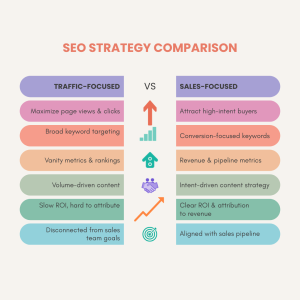
- Chasing traffic over intent: Visitors who never planned to buy rarely convert.
- Ignoring mobile users: A poor mobile experience loses a large share of shoppers.
- Hiding your call to action: If the next step isn’t obvious, people leave.
- Expecting instant results: SEO rewards patience and consistency.
Avoid these, and more of your traffic turns into real revenue.
Conclusion
Learning how to increase sales through SEO comes down to one shift in thinking: chase buyers, not just clicks. Target the right keywords, sharpen your product pages, speed up your site, and build trust with helpful content and honest reviews. For small businesses, startups, and beginners, this loop turns free search traffic into a dependable source of sales.
Your next step is simple. Pick one tactic from this list, start with buyer-intent keywords or your Google Business Profile, and apply it this week. Small, steady improvements add up, and your results will grow with every step you take.
FAQ
How long does SEO take to increase sales?
Most businesses see meaningful results in three to six months. Local SEO and technical fixes can work faster, while content-driven growth takes longer to build.
Can SEO really increase sales for a small business?
Yes. SEO connects you with people already searching for what you offer, which makes them more likely to buy. Even small, local efforts can bring steady customers.
Do I need a big budget to start?
No. Many high-impact tactics like keyword research, your Google Business Profile, and page improvements cost little to nothing beyond your time.
What’s more important: traffic or conversions?
Conversions. High traffic means little if visitors don’t buy. Focus on attracting the right people, then make it easy for them to take action.
Is SEO better than paid ads for sales?
They serve different goals. Ads bring quick traffic, but stop when you stop paying. SEO builds slowly but keeps working long-term, so many businesses use both.
Can beginners learn SEO on their own?
Yes. Start with a few core tactics, focus on buyer intent, and build your skills with practice. Each page you improve teaches you something new.
Ready to Turn Search Traffic Into Sales?
If figuring out SEO feels overwhelming, you don’t have to do it alone. I help small businesses, startups, and aspiring marketers build SEO strategies that attract the right buyers and turn clicks into real sales. Contact me today or view my services to start growing your revenue through search.